Unigue Part About a Beef Sheep
vii Things You Didn't Know About Sheep
Sheep are clever and fascinating. They've co-evolved with humans providing companionship, food, clothing, shelter and carbon sequestration. Read on to learn how sheep accept and will continue to play a key role in our communities.
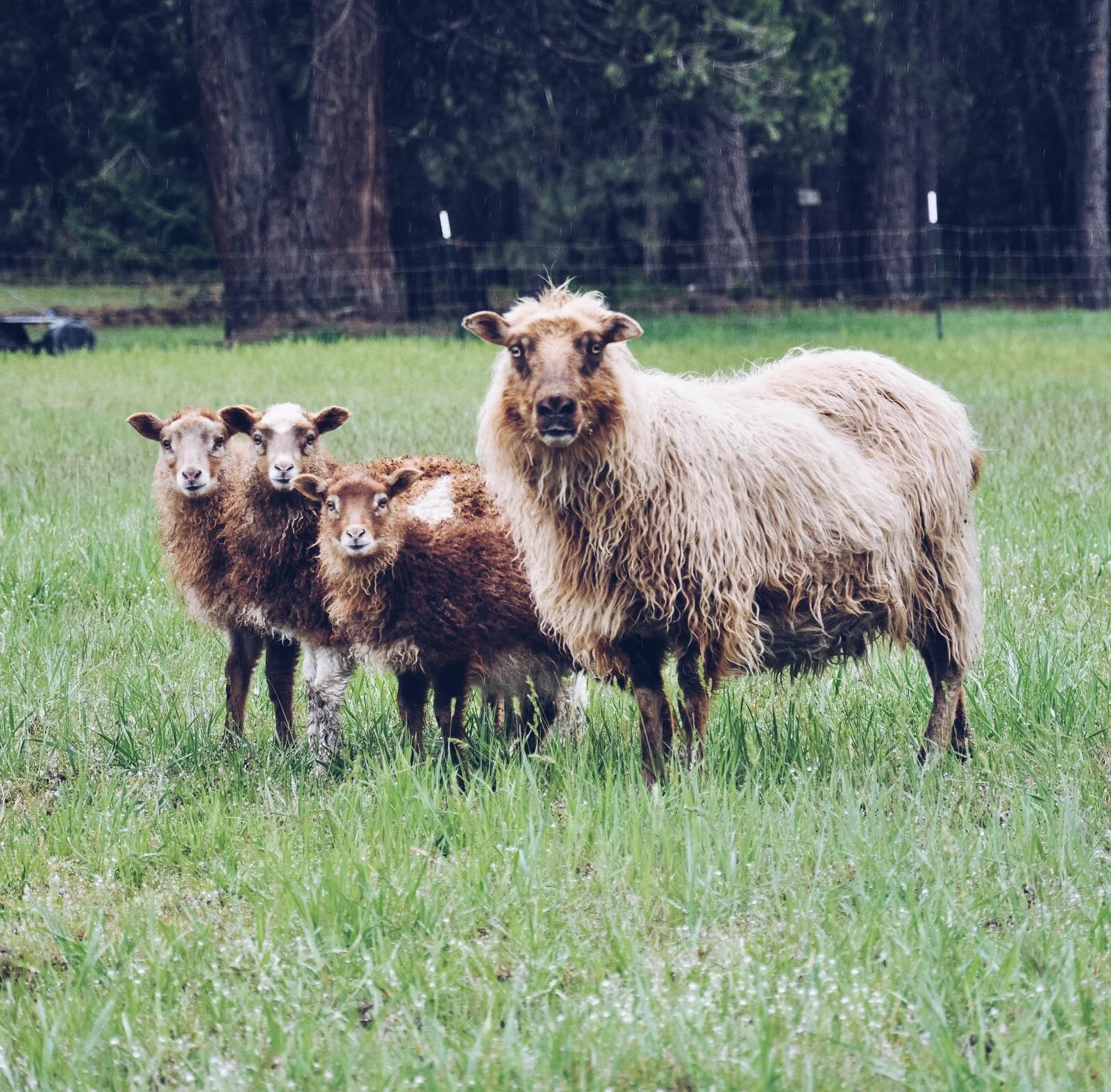
Wool, meat, milk: sheep have sustained humans' most basic needs for thousands of years. Today, American sheep farmers heighten over v one thousand thousand sheep annually. This represents a major downturn since 1946 when the domestic sheep flock totaled 56 million, putting the United states every bit the summit global sheep producer at the time.
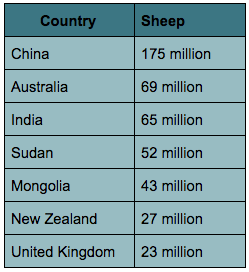
Although the appearance of synthetic fibers and changes in the meat manufacture have pushed sheep out of the spotlight, these wooly allies have played a critical role in our survival for a long time. They accept quite a few interesting characteristics, too.
ane. Sheep are among the showtime animals domesticated by humans.
Sheep are some of our oldest fauna allies, the descendants of the wild, big-horned Mouflon that roamed Europe and Asia. The species we at present know every bit Ovis aries became deeply interdependent with humans old betwixt 11000BC and 9000BC as early shepherds began selecting herds for proficient temperament and productivity.
Domesticated sheep are non originally native to the United States. The first domestic sheep came with the Conquistadores in the 1500s, beginning with Columbus' arrival in 1492.
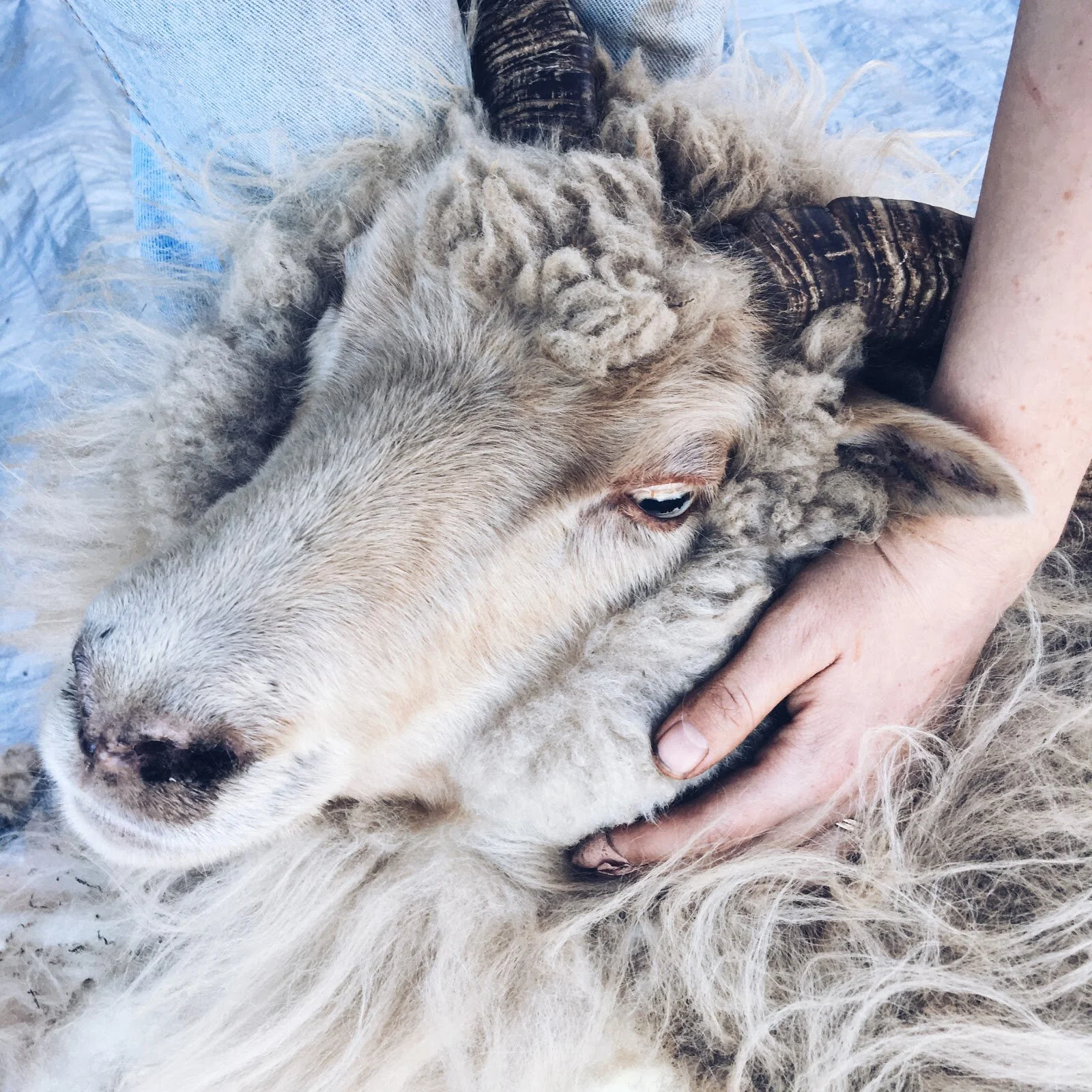
2. Sheep have rectangular pupils
This unnerving gaze actually helps them accept an almost 360-caste view of their surroundings. Allowing them to see a wide-angle in the harsh glare of the open up grasslands. Sheep have mediocre depth perception, however, which is why mothers rely on the unique smell and sound of their lamb's voice to observe them.
3. Sheep don't accept teeth on their upper jaw, just they have a special pinnacle lip that is divided into 2 parts called a philtrum
Two upper lips! The divided hemisphere's of the sheep's philtrum lets them be selective as they eat, avoiding stems, grabbing leaves and blades, and biting forage more closely to the ground than other ruminants.
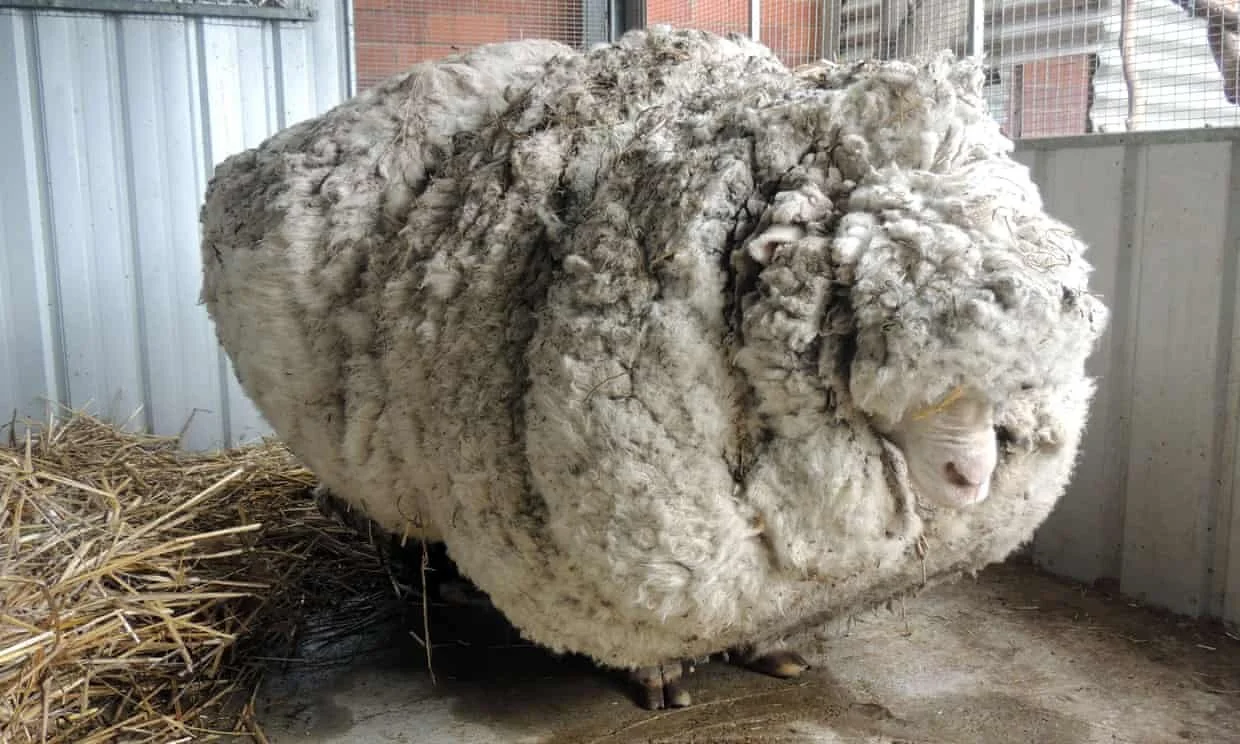
iv. Wool never stops growing, but not all sheep have wool
While hair sheep like Khatadins and Jacobs don't have wool, nigh sheep breeds volition grow their woolly fleeces continuously whether or not they are shorn. In fact, in 2014 a sheep named Shrek was found hiding in a cave after evading shearers for six years. His fleece was threescore pounds, enough to make 20 men'due south suits.
The average sheep produces viii-lbs of wool per twelvemonth. When done correctly, shearing does not hurt sheep. Virtually shearings take place in the spring when sheep demand relief from the warming temperatures. Wool sheep have co-evolved with humans and are dependent on u.s.a. to help them manage their fleeces. It would exist brutal not to shear them for a diversity of reasons. The heavy wool limits their mobility and makes them more susceptible to experiencing fly-strike, both of which can lead to death
5. Sheep aren't stupid
Despite the common assumption that sheep are unproblematic-minded followers, a study by CSIRO's Animal Behavior and Welfare director, Carolina Lee, showed that sheep can navigate a circuitous maze when offered a social reward. In a 2007 report, neurobiology researcher Keith Kendrick showed that sheep tin remember fifty other sheep's faces two years later. The University of California cataloged the complex social networks of rams, which showed that sheep tin can exist empathetic and help one another.
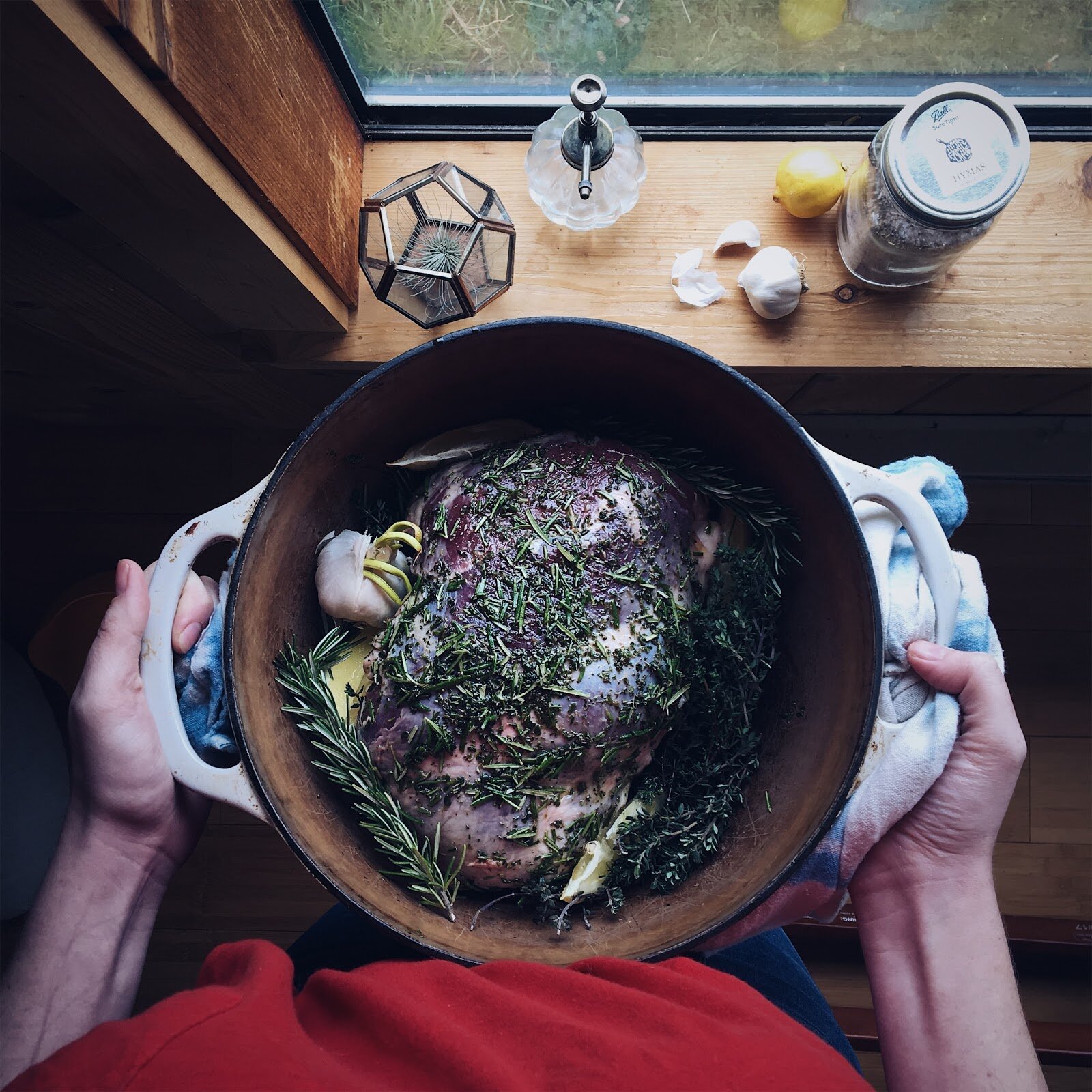
6. Just half of Americans take e'er tried lamb and information technology's really good for you lot
According to the American Lamb Board, merely 50% of Americans accept ever tried lamb. The corporeality of lamb eaten per person this year is well-nigh 0.6lbs, compared to 55lbs of beefiness. The refuse in consumer interest since the 1950s was caused by a variety of factors, ane of which was bad experiences American GIs had with eating tough meat from very old sheep during World War II.
Lamb packs a powerful dial of essential nutrients, with loftier levels of zinc, niacin, selenium, vitamin B12 and iii times the omega iii fat acids than beef. A iii-ounce. serving of lamb has only 175 calories but half your daily poly peptide needs. You'd accept to consume 742.2 calories or about 107 almonds to get the same corporeality of protein.
If you tried lamb and you lot didn't similar it, it might be considering of lanolin, which is the oil sheep produce to go along their fleece make clean. Near fine-wool sheep such every bit Merino have a lot of lanolin, while hair sheep and coarse-wool sheep such every bit Katahdin, Dorset, or Icelandic tend to have less yielding a milder flavor in the meat. If yous prefer a milder flavor, discover a local farmer that offers a coarse-wool sheep breed or inquire your local butcher.
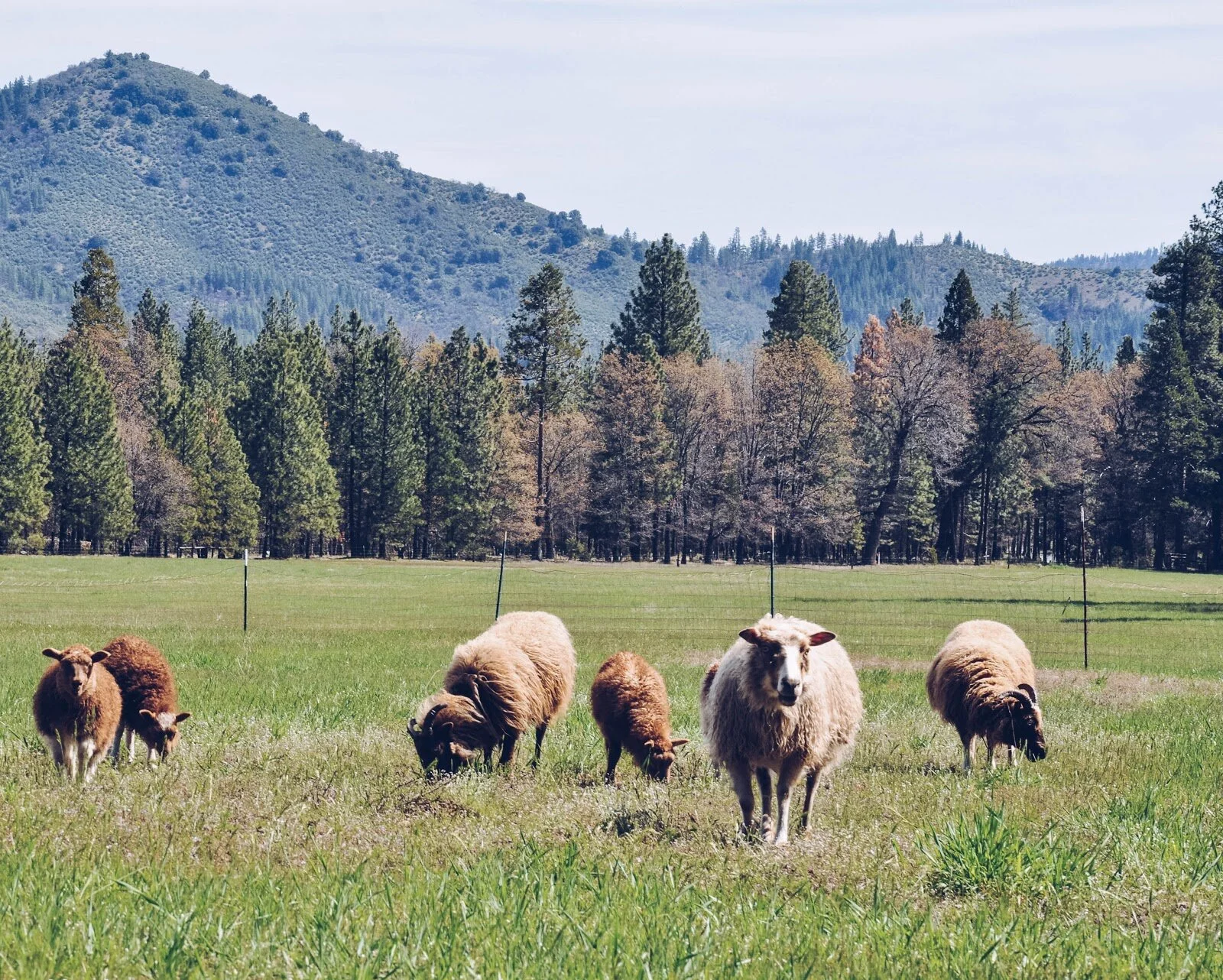
7. Sheep have an important role in soil regeneration
Grazing animals can improve soil wellness and pasture vigor through strategic grazing methods. Sheep offer the unique reward of their size, which makes a smaller impact on the land and allows for integration with other crops for added soil health. Sheep can eat many types of plants that are not equally palatable to cattle, especially primitive breeds like Jacob'due south and Navajo Churro. This allows them to control weed species naturally, reducing the demand for chemic inputs similar herbicides. For beginning farmers or farmers with limited resources, sheep offering a great way to begin a livestock operation. They are smaller and easier to handle than cattle while still offering the multifaceted benefits of grazing.
Ongoing research at UC Davis has shown that moving grazing animals in strategic patterns tin can sequester carbon. So far, the research estimates that grazing American rangelands in this holistic style could sequester 330 1000000 metric tons of carbon.
Sheep are role of the path to amend meat
Sheep are not only clever, fascinating creatures but besides long-term allies in helping humans thrive. After co-evolving with them as a major source of our nutrient, habiliment, shelter and even carbon sequestration, domesticated sheep demand us to keep them in our diets for the continued benefits to both species.
To notice lamb for auction in your area that meets the highest ecology and ethical standards, browse each farm's website looking for specific references to improving soil health. You can also detect your local Savory Hub, which will have a list of farmers who have completed training in grazing their livestock for optimal fauna and environmental wellbeing, or review Eat Wild's listings.
While pasture-based sheep farms are cleaning upwardly our environs, sheep are under assault from voices who are unaware of the regenerative impact that ruminant animals including sheep can have on rehabilitating land, preserving habitats, and providing nutrient-dense protein to communities. Back up Sacred Cow to bring the environmental, nutritional and upstanding example for ameliorate meat to the public.
Allie Hymas raises Icelandic sheep for meat and fiber in Southern Oregon's Rogue Valley. In addition to writing about sustainable agriculture, Allie supports and advocates for family farms every bit Northwest Farmer'south Spousal relationship secretarial assistant. Larn more than @hymasfamilylamb or www.hymasfamilylamb.com.

Source: https://www.sacredcow.info/blog/7-things-you-didnt-know-about-sheep
0 Response to "Unigue Part About a Beef Sheep"
Post a Comment